
Precision nutrient management stands as a cornerstone of modern high-yield farming. While primary macronutrients like Nitrogen, Phosphorus, and Potassium (NPK) receive substantial attention, secondary macronutrients such as Magnesium and Sulfur are equally vital for ensuring optimal crop development. Magnesium serves as the central atom of the chlorophyll molecule, directly driving photosynthesis, while sulfur aids in protein synthesis and enzyme activation.
For commercial agricultural producers, crop consultants, and input distributors, knowing the precise agricultural epsom salt application rate is essential. Applying too little fails to cure nutrient deficiencies, whereas overdosing can induce osmotic stress or leaf scorching. Sourcing high-solubility PINSEN agricultural grade magnesium sulphate heptahydrate ensures predictable nutrient release and maximum absorption efficiency across various farming setups.
1. Understanding the Role of Magnesium Sulphate Heptahydrate in Crop Yields
Magnesium Sulphate Heptahydrate ($MgSO_4 \cdot 7H_2O$), widely recognized in global trade as agricultural Epsom salt, is a fully water-soluble mineral fertilizer. When introduced to agricultural soils or crop foliage, it rapidly dissociates into bioavailable magnesium ($Mg^{2+}$) and sulfate ($SO_4^{2-}$).
Getting the application dosage right depends heavily on the chosen delivery system. Whether supplying commercial growers or expanding your company’s PINSEN high-purity inorganic sulphate lineup, providing clear technical application guidelines adds immense value to your distribution network.
2. Foliar Spray Application: Rates, Guidelines, and Best Practices
Foliar feeding is deployed primarily when crops experience acute magnesium deficiency during fast-growing vegetative stages or fruit development, requiring an immediate rescue treatment.
- Standard Concentration Rates: For most field and horticultural crops, a 1% to 2% aqueous solution is standard. This translates to dissolving approximately 1 to 2 kilograms of agricultural Epsom salt per 100 liters of water.
- Water Volume Per Hectare: Growers typically apply 400 to 600 liters of solution per hectare, ensuring thorough, even leaf coverage without excessive runoff.
- Timing and Microclimate: Applications should always occur during early morning or late evening when ambient temperatures are low and leaf stomata remain fully open. Spraying under direct, intense sunlight should be strictly avoided to prevent localized leaf burn.
3. Drip Irrigation (Fertigation) Application Rates and Protocols
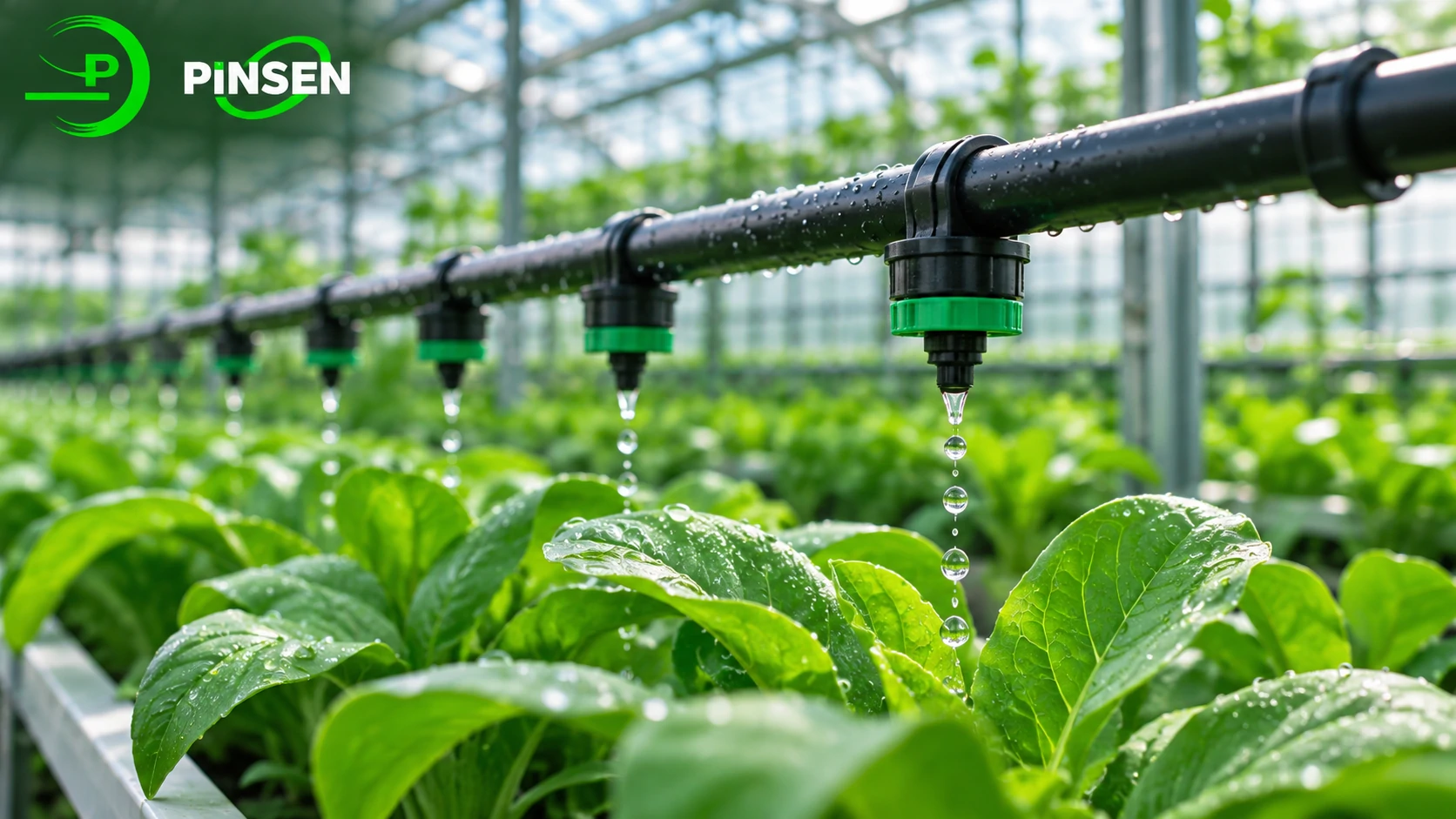
Drip fertigation delivers continuous, root-zone nourishment, making it ideal for greenhouse vegetables, drip-irrigated orchards, and high-value row crops.
- Root-Zone Dosing Rates: Depending on soil test deficiencies and crop uptake curves, standard maintenance fertigation ranges from 15 to 30 kilograms of magnesium sulphate heptahydrate per hectare per application cycle. For severe deficiency remediation, rates may scale up based on local agronomist recommendations.
- Solubility and Clogging Prevention: Because modern drip emitters feature microscopic outlets, low-quality or insoluble raw materials will rapidly cause blockages. PINSEN’s ultra-pure crystalline heptahydrate dissolves completely with zero sediment, protecting irrigation infrastructure.
4. Comparative Analysis: When to Choose Foliar vs. Drip Irrigation
| Operational Aspect | Foliar Spraying | Drip Fertigation |
|---|---|---|
| Primary Purpose | Emergency rescue & acute deficiency correction | Baseline nutrition & steady root development |
| Speed of Response | Rapid (within 48 to 72 hours) | Moderate (steady uptake over root growth cycle) |
| Labor & Equipment | Requires tractor-mounted sprayers or drones | Integrated directly into existing irrigation systems |
| Risk Factors | Potential leaf scorch if concentration is too high | Salt accumulation in heavy soils if over-applied |
5. Securing High-Purity Agricultural Epsom Salt in Bulk from PINSEN
Commercial farm owners and regional agricultural input distributors require reliable supply chains backed by strict quality assurance. Operating three advanced manufacturing bases across Shandong with an annual capacity of 200,000 metric tons, PINSEN delivers consistent batch quality, verified Certificate of Analysis (COA) compliance, and export-grade packaging (25kg, 50kg, and 1250kg Jumbo Bags) tailored for global container shipping.
Frequently Asked Questions (FAQ)
Q1: Can agricultural Epsom salt be mixed with other water-soluble NPK fertilizers in a drip irrigation system? A: Yes, magnesium sulphate heptahydrate is generally compatible with most standard water-soluble NPK fertilizers and micronutrients. However, growers should avoid mixing high concentrations directly with calcium-bearing fertilizers in the same concentrated stock tank to prevent calcium sulfate precipitation.
Q2: What is the maximum safe foliar concentration for sensitive crops like strawberries or young seedlings? A: For sensitive crops or young plant tissues, it is recommended to start with a lower concentration of 0.5% to 1.0% (500g to 1kg per 100 liters of water) to test crop tolerance before scaling up to standard field application rates.
Q3: What is PINSEN’s standard Minimum Order Quantity (MOQ) for international bulk export? A: Our standard MOQ for containerized maritime export is 27 Metric Tons (1 x 20′ FCL), ensuring optimized freight economics and secure bulk transit from Qingdao or Tianjin ports.